
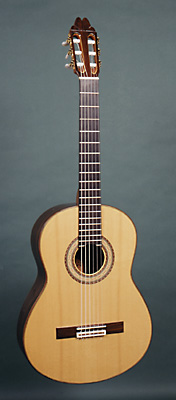
Welcome to the fantastic world of classical guitar. In this site, you will find classical guitar pieces, in midi format, for one and more guitars: actually 5641 MIDI files from 96 composers. Information on how to create midi files and a tutorial on the tablature notation system is presented. Images of ancient guitars provided.
|
|
The real U-571 was a German Type VIIC U-boat that was launched on June 5, 1942. On May 28, 1943, the U-boat was attacked by American and British warships, and it was forced to surface. The U.S. Navy's USS Stingray (SS-234) did play a role in the events surrounding U-571, but the actual capture was more complex and involved multiple ships.
While U-571 may not be a reliable history lesson, it remains a gripping example of the "silent service" sub-genre, highlighting the bravery of submariners and the critical importance of cryptography in modern warfare. How Much Should We Teach the Enigma Machine?
One of the film’s greatest strengths is its ensemble. Before he became a rom-com icon (and later, a True Detective), Matthew McConaughey plays Andrew Tyler as a raw nerve—a green executive officer haunted by self-doubt. His arc from indecision to decisive command is the emotional backbone of the movie.
Second, U-571 interrogates identity and deception. The Americans must masquerade as a damaged German submarine to escape detection, a conceit that generates dramatic irony and moral tension. The masquerade forces characters to wrestle with the costs of deception—not only tactical risk but the internal friction of assuming an enemy guise. This theme links to wartime ambiguity: beneath clear national allegiances lies improvisation, compromise, and a willingness to blur moral lines for survival.
It was co-written by David Ayer (who later wrote Training Day and directed Fury ), which explains the gritty, high-pressure dialogue. #MovieTrivia #U571 #BonJovi #DavidAyer #CinemaFacts Quick Movie Summary for Reference:
Composers are grouped in 6 pages: A-B;
C-F;
G-L;
M-O;
P-R; S-Z .
J.-S.
Bach , A.
Barrios Mangore , N. Coste
, M. Giuliani , F.
Sor and F.
Tarrega are on their own page
Click here
to listen to 20 great MIDI from the site
Composers in alphabetical order
The real U-571 was a German Type VIIC U-boat that was launched on June 5, 1942. On May 28, 1943, the U-boat was attacked by American and British warships, and it was forced to surface. The U.S. Navy's USS Stingray (SS-234) did play a role in the events surrounding U-571, but the actual capture was more complex and involved multiple ships.
While U-571 may not be a reliable history lesson, it remains a gripping example of the "silent service" sub-genre, highlighting the bravery of submariners and the critical importance of cryptography in modern warfare. How Much Should We Teach the Enigma Machine? movie u-571
One of the film’s greatest strengths is its ensemble. Before he became a rom-com icon (and later, a True Detective), Matthew McConaughey plays Andrew Tyler as a raw nerve—a green executive officer haunted by self-doubt. His arc from indecision to decisive command is the emotional backbone of the movie. The real U-571 was a German Type VIIC
Second, U-571 interrogates identity and deception. The Americans must masquerade as a damaged German submarine to escape detection, a conceit that generates dramatic irony and moral tension. The masquerade forces characters to wrestle with the costs of deception—not only tactical risk but the internal friction of assuming an enemy guise. This theme links to wartime ambiguity: beneath clear national allegiances lies improvisation, compromise, and a willingness to blur moral lines for survival. Navy's USS Stingray (SS-234) did play a role
It was co-written by David Ayer (who later wrote Training Day and directed Fury ), which explains the gritty, high-pressure dialogue. #MovieTrivia #U571 #BonJovi #DavidAyer #CinemaFacts Quick Movie Summary for Reference:
Note to MIDI sequence contributors
Your submissions are welcomed.
Please send them by e-mail (end of text). Pieces
should bear the composer's name and be properly identified.(ex.: J.K. Mertz (1806-1856) Nocturne
Op.4 No.2.). The submissions
should bear information on the transcriber or arranger when available. The submitter's name
will appear beside the accepted submission.
This site exists primarily to showcase pieces written for the classical
guitar. Established and recognized transcriptions and arrangements (e.g.,
Tarrega, Segovia,..) of pieces written by non-guitar composers will also be given
high priority.
New compositions for the classical guitar are also welcomed. New
compositions that meet quality guidelines will be added to the site. For
new contributors, it would be appreciated if you would also submit several
pieces by known composers in addition to your own compositions. This will
help to expand the repertoire of established works for the classical guitar in
addition to expanding the repertoire of new music.
Last update: March 8 2026
Copyright François Faucher 1998-2025
 G.F.Handel's Sonata 2. Allegro
3.Adagio HWV368
G.F.Handel's Sonata 2. Allegro
3.Adagio HWV368